Frequently Asked Questions
Common Questions
Getting Started
Two ways to get blades to me:
- Drop them in the secure drop box at 5334 SE 34th Ave — available 7 days a week, anytime. No appointment needed.
- Schedule a weekend mobile pickup — I come to you anywhere in the Portland metro area on Saturdays and Sundays.
You can book either option through the website. Most customers use the drop box — it's the fastest turnaround and runs on your schedule, not mine.
The drop box sits on my porch at 5334 SE 34th Ave and is accessible 7 days a week, 24 hours a day. Drop off your blades inside (make sure they are wrapped in a bag or towel to protect your hands). After your knives are sharpened, I'll text you so you can come pick them up. Weekday drop-offs are returned the next day. Weekend drop-offs before 3 PM are returned the same day.
Most orders are turned around in 24 hours or less. Weekday drop-offs are returned next day. Weekend drop-offs before 3 PM are returned same day. Larger orders, chip repairs, or restoration work may take longer — I'll always text you with an estimate before starting if the job needs extra time.
The studio is in the Reed neighborhood of Southeast Portland, but customers come from across the metro. The drop box works for anyone willing to drive to it. Weekend mobile pickup covers Southeast, Northeast, North, Northwest, and Southwest Portland, plus Milwaukie, Lake Oswego, West Linn, Oregon City, Tigard, Beaverton, Gresham, and Vancouver, WA. Mobile pickup is priced at $1 per minute of travel time.
Call or text (503) 839-8693 anytime — text is fastest. You can also email oliver@portlandssharpest.com or send a request through the booking form on the website.
Process & Quality
Every blade gets inspected first — checking the edge condition, the existing angle, any chips or damage, and the overall geometry. From there, the work happens in stages:
- Reprofiling (if needed) — for damaged, neglected, or improperly angled blades, the bevel gets reshaped on a belt grinder at the correct angle for that specific blade.
- Sharpening — the working edge gets established through a progression of finer grits, removing the minimum amount of material needed to bring the blade back.
- Finishing — every blade is hand-polished on a leather strop for a razor-sharp finish.
The whole process is tailored to the blade — a Japanese gyuto, a hunting knife, and a pair of grooming shears all get different treatment because they're different tools.
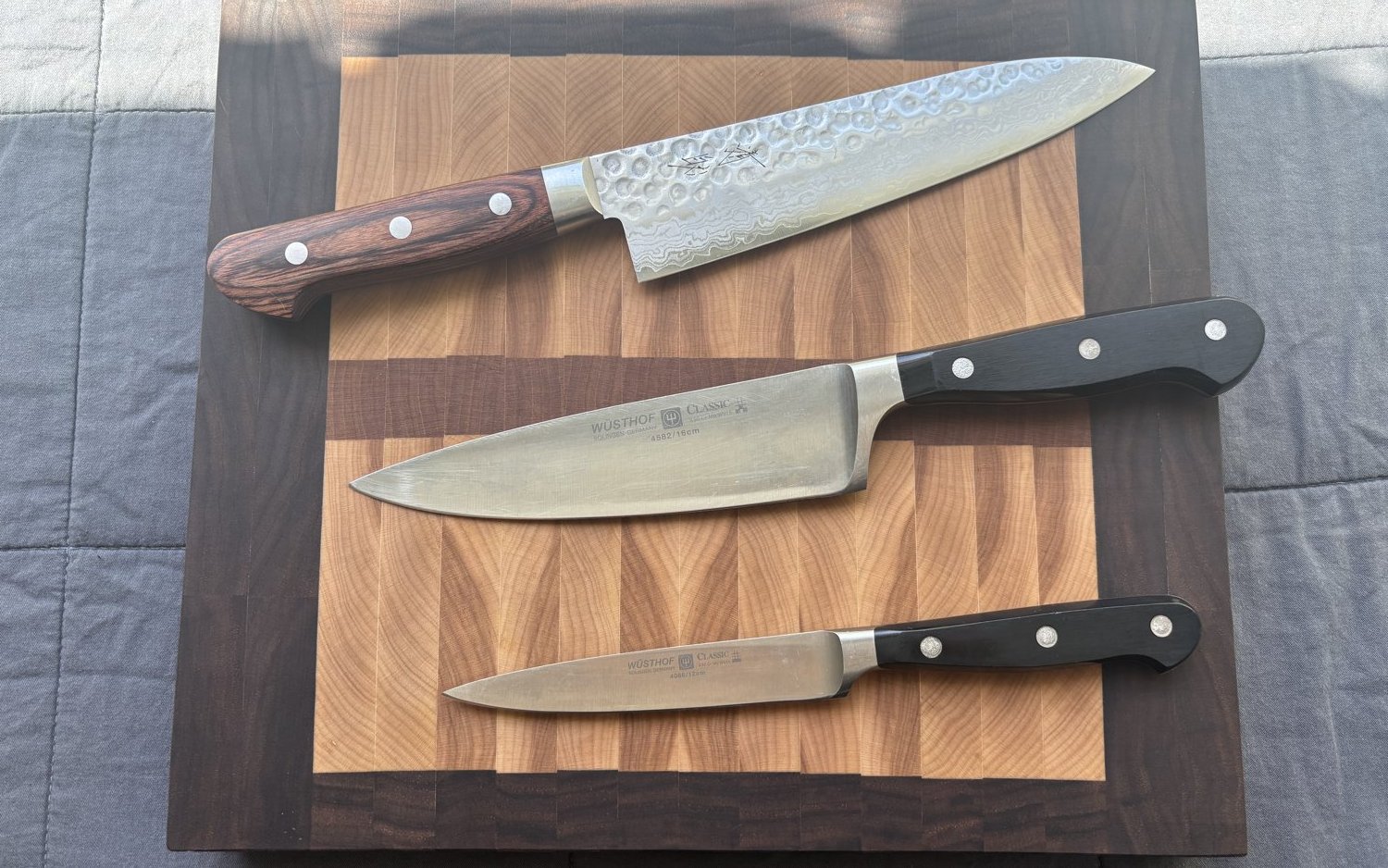
No — done correctly, sharpening protects your knife. The bigger risk to an expensive knife is bad sharpening: aggressive grinding, the wrong angle, or removing too much material. My approach is the opposite. Every blade gets sharpened at its correct angle with the minimum material removal needed to restore the edge. High-end knives — Japanese knives, custom blades, premium European steel — are welcome and handled with the care they deserve.
Yes. Japanese knives — gyutos, santokus, nakiris, petty knives, and single-bevel knives like yanagibas and usubas — are sharpened at their correct angles (typically 12-15° per side for double-bevels, with single-bevels handled appropriately for the blade style). All major brands welcome: Shun, Global, Tojiro, Miyabi, MAC, Masamoto, and custom makers.
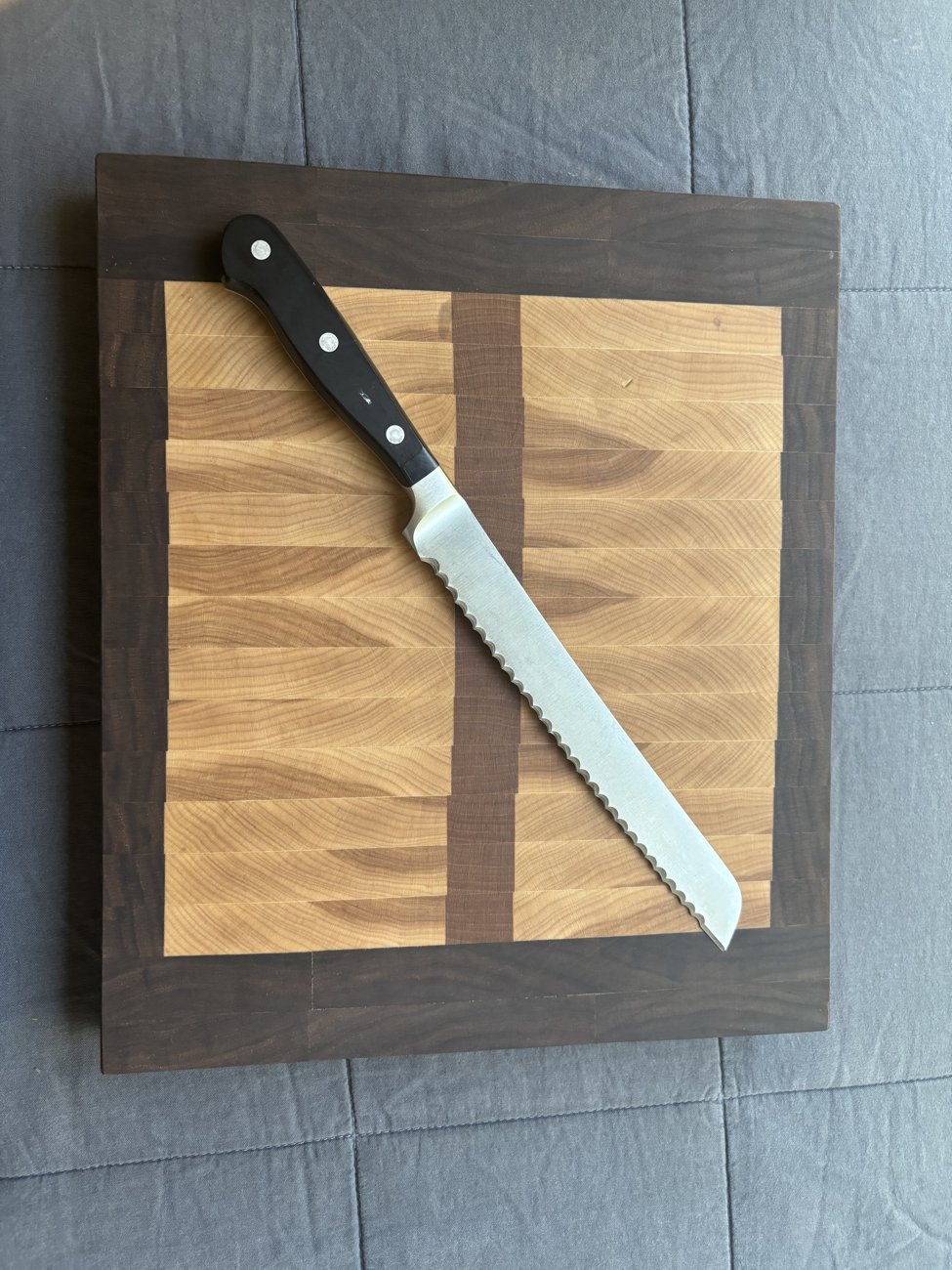
Yes. Serrated knives — bread knives, steak knives, kitchen serrations — are sharpened by hand, one serration at a time, restoring each tooth to a clean cutting edge. This is detailed work and takes longer than straight-edge sharpening, but the result is a serrated blade that cuts as well as it did new. See all of our serrated and saw sharpening.
Yes — repair work is a regular part of what comes through the studio. Chipped edges, broken tips, rolled edges, surface rust, and pitting can all be addressed. Pricing depends on the severity of the damage and is given after a free assessment. Drop off the blade, get an estimate by text, and decide from there. No surprise charges. See all of our knife and tool repair.
Broken Tip → Repaired
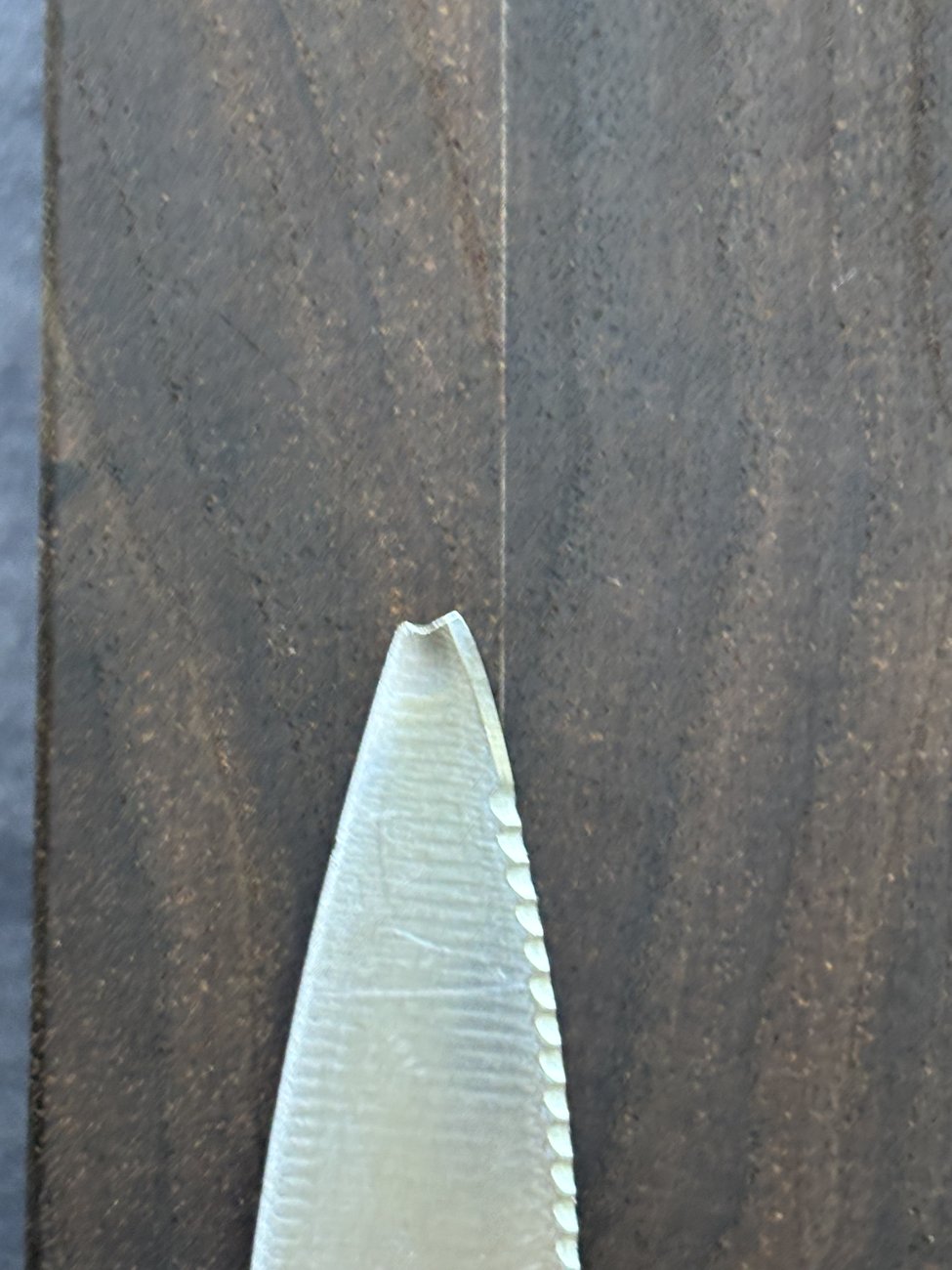
A snapped-off tip, broken past the point.
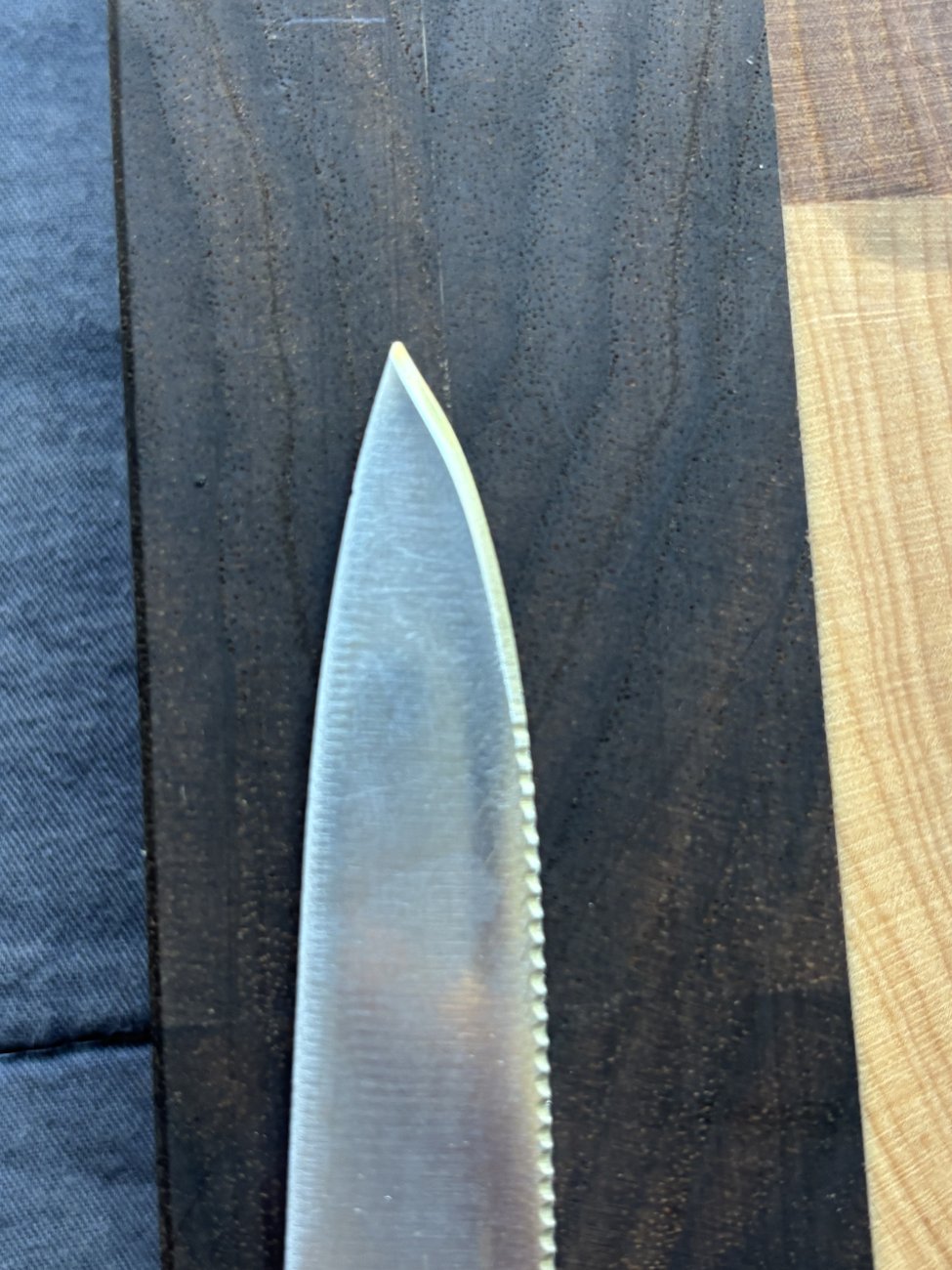
Reshaped by hand into a clean, working point.
Logistics
The drop box is available 7 days a week, 24 hours a day — drop off anytime that works for you. No appointment needed.
For pickups and in-person conversation, plan around the turnaround schedule: weekday drop-offs are ready the next day, weekend drop-offs before 3 PM are ready same day. I'll text you when your order is done so you know exactly when to come back.
Mobile pickup runs on Saturdays and Sundays, 10 AM to 7 PM.
The studio is on a residential street in the Reed neighborhood, with free street parking directly in front of the house at 5334 SE 34th Ave. There's almost always a spot. The drop box is on the porch, so the entire drop-off takes about thirty seconds — pull up, drop your blades, you're done.
Mobile pickup runs on weekends only — Saturdays and Sundays, 10 AM to 7 PM. Schedule through the booking form on the website by selecting your preferred day and time window (morning, midday, afternoon, or evening). I'll confirm by text.
After you book, I'll text to confirm the pickup time. I come to your address, collect your blades, and take them back to the studio for sharpening. Weekend mobile pickup orders are returned the same day — usually within a few hours. I'll text again when I'm on my way back to drop them off.
Mobile pickup is priced at $1 per minute of travel time from the studio in Reed (SE Portland). Most pickups in close-in Portland neighborhoods run $15–30 round trip. Pickups in outlying areas like Beaverton, Lake Oswego, or Vancouver, WA will run higher — I'll always give you the estimated travel cost when confirming your booking, so there are no surprises.
Larger orders are welcome — restaurant kitchens, catering companies, professional cooks, and anyone with a serious knife collection. For orders over ten blades or any commercial inquiry, text or email ahead so I can plan the turnaround. Bulk pricing may be available for ongoing commercial work.
Pricing & Payment
Cash and credit card. A $5 processing fee applies to all card payments — paying in cash avoids the fee. Cards accepted include Visa, Mastercard, and American Express. Payment is collected at pickup or drop-off.
Card processors charge me a percentage of every transaction. Rather than build that cost into every price across the board (which would mean cash customers subsidize card customers), I charge it only on card payments. Pay in cash and you save the $5. It's the same way most independent shops handle it.
If a blade comes back and it's not where you want it, bring it back and I'll fix it. No charge, no argument. The guarantee is a 120 BESS edge or better — if I missed that mark on your blade, that's on me to make right. Sharpening is a craft, and the goal is always a customer who walks away with a blade they're excited to use again.